
D2C Hair Health Brand: 7x Organic Traffic in 18 Months (Client Case Study)

At a glance
- Client: D2C hair health brand, India. Diagnosis-led, subscription treatment kits.
- My role: Fractional Head of SEO, embedded in the team, through SPTPL.
- Duration: 18-month core engagement, then a 3-month handover.
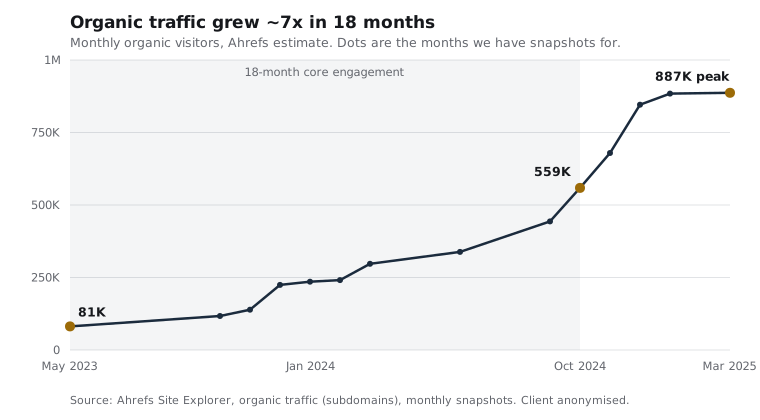
- Result: Organic traffic 81K to 559K a month (~7x). 3,876 non-branded leads a month.
The constraint
The brand sold a treatment, not a product.
Every visitor was sent to 1 place: a hair test. No category pages. No product pages. No cart.
So the usual D2C SEO playbook was off the table. “Best shampoo for hair fall” leads to a product page. We didn’t have one.
And the competition was every mass-market hair brand in India, with bigger domains and bigger budgets.
The bets we shipped
1. Measure leads, not traffic. The sale happened on a coaching call, not on the site. So we made the hair-test form start the primary conversion in GA4, split branded from non-branded. Without this, the program would have looked like it wasn’t working.
2. Own “find a doctor” intent, not “buy a product” intent. The brand’s model was diagnosis first. That maps to people searching for a hair doctor in their city. Competitors selling shampoos couldn’t credibly rank for that.
3. Programmatic city pages instead of 105 articles. We built 1 template for “hair doctor [city]” and scaled it to 105 Indian cities. Build once, compound forever.
4. Hindi first. The fastest-growing customers searched in Hindi. Hindi queries had the same intent and far less competition. We built the content calendar around them first, and took position 1 on queries with 3,500 to 15,000 searches a month.
5. Commercial questions, not just awareness. We targeted the questions people ask right before buying. A “how much does it cost” page became a top-5 lead source.
6. Build the team, then hand it over. I hired and ran a 4-person in-house SEO team, then hired the full-time Head of SEO who took over. 18 months later, that hire is still in the role.
What didn’t work
Blogs converted at a fraction of the city pages. Blog readers converted at 0.04% of sessions. City pages converted at 0.36%. Part of the gap was ours to fix: blog readers weren’t being retargeted. We found it late.
We scored success on non-branded organic only. Branded organic was 3 to 4 times the size of non-branded, and none of it counted toward the goals we were measured on. The program delivered more than the scorecard showed. Lesson: measure the whole organic channel.
Results
| Metric | Before | After | Change |
|---|---|---|---|
| Organic traffic, monthly (Ahrefs) | 81K (May 2023) | 559K (Oct 2024) | ~7x in 18 months |
| Peak organic traffic (Ahrefs) | 887K (Mar 2025) | ~11x | |
| Ranking keywords (Ahrefs) | 63,941 (Feb 2024) | 134,773 (Oct 2024) | +111% |
| Top-3 keywords (Ahrefs) | 1,034 (Feb 2024) | 3,261 (Oct 2024) | +215% |
| Referring domains (Ahrefs) | 509 (Feb 2024) | 828 (Oct 2024) | +63% |
| Blog clicks a day (Search Console) | ~900 (Apr 2023) | 8,900+ (Jun 2024) | ~10x |
| Non-branded leads a month (GA4 form starts) | 3,876 (Oct 2024) |
The city pages were the standout. 105 pages drove 466 non-branded leads a month, about 4 leads per page. They converted at 9x the rate of blog content.
Over the first 16 months, Search Console recorded 1.58M clicks from 196M impressions.
Sources: Ahrefs Site Explorer (traffic, keywords, referring domains); Google Search Console (clicks, impressions); GA4 form-start events (leads, conversion rates). Client anonymised; figures as recorded during the engagement.
What this means for you
If your product doesn’t fit the standard SEO playbook, that’s often the opportunity. The intent your competitors can’t serve is the intent you can own.
Book a 30-minute audit call and I’ll show you where that intent is for your business.