
D2C Women's Health Brand: 7x Return on SEO Spend (Client Case Study)

At a glance
- Client: D2C women’s health brand, India. Sells products online and runs a clinic network across Indian cities.
- My role: Fractional Head of SEO, through SPTPL. Strategy, technical SEO, content direction, programmatic pages, AI visibility.
- Duration: Feb 2024 to May 2026.
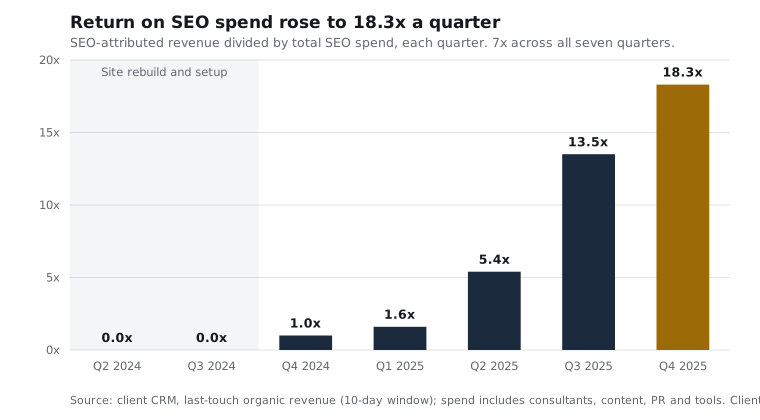
- Result: 7x return on total SEO spend over 7 quarters. Paid back in under 20 months. Top-3 Google rankings from 458 to 3,945.
The constraint
The brand sold 2 things: products in an online store, and consultations at its clinics. The clinics made the money.
Search traffic mostly landed on blog posts about periods, PCOS and fitness. Those readers rarely booked.
The site ran on a Shopify theme. It could host product pages and a blog. It couldn’t host hundreds of city and locality pages, each with its own data, structured data and lead form. So the pages that turn a searcher into a clinic visit couldn’t exist.
The bets we shipped
1. Price every click before recommending anything. The first deliverable merged CRM leads and sales with Search Console clicks, page by page. A clinic-page click was worth 161x a blog click. That one number reordered the whole roadmap.
2. Move off the store theme. In month 1, I recommended a custom front end with a headless CMS, with the store kept on its own subdomain. Leadership, including the CEO, approved the cost. Every page type below depended on this call.
3. Build the pages that convert. City and locality clinic pages, cost guides, centre directories and doctor-near-me pages. Each with structured data and a lead form. Small locality pages converted best: one turned 53% of its leads into paying customers.
4. Make the blog route readers to clinics. Non-branded pages brought about 80% of organic clicks. Clinic, success-story and review pages captured about 83% of leads and 95% of revenue. So every blog post got a fixed call to action pointing to clinic pages.
5. Write for Hindi searchers too. English and Hindi/Hinglish content shipped side by side. “pcod kya hai” alone has 38,000 searches a month and almost no competition.
6. Start on AI visibility early. By Feb 2026 the brand had its entity set up, a 46-prompt ChatGPT tracker across 8 non-branded topics, and a map of the Reddit threads that mention it.
What didn’t work
2 quarters of zero return. Q2 and Q3 2024 went into the site rebuild and the content pipeline. SEO revenue started in Q4 2024, 6 months in.
Comparison pages earned clicks and no revenue. The brand-vs-brand template shipped without a lead form. Adding one was the next fix on the list.
Last-touch attribution undercounts the blog. Blog readers rarely book in the same session, so on paper the blog earns close to nothing. Assisted-conversion tracking was the next measurement upgrade.
Fewer clicks in 2026, by design. From Jan to Apr 2026, Google clicks fell 41% after the brand cut costs and pruned low-intent content. Over the same months, the share of visitors who became leads rose from 2.73% to 4.21%, and monthly leads held roughly steady.
Results
| Metric | Before | After | Change |
|---|---|---|---|
| Return on total SEO spend, 7 quarters (CRM) | 7x | Paid back in under 20 months | |
| Quarterly return on SEO spend (CRM) | 1.0x (Q4 2024) | 18.3x (Q4 2025) | 18x in 4 quarters |
| Top-3 keywords (Ahrefs) | 458 (Feb 2024) | 3,945 (Mar 2026) | +761% |
| Top-10 keywords (Ahrefs) | 875 (Feb 2024) | 6,480 (Mar 2026) | +641% |
| Organic traffic, monthly (Ahrefs) | 65K (Feb 2024) | 145K (Jan 2026 peak) | +121% |
| Referring domains (Ahrefs) | 207 (Feb 2024) | 1,028 (May 2026) | +397% |
| Visitor-to-lead rate (CRM, Search Console) | 2.73% (Jan 2026) | 4.21% (Apr 2026) | +54% |
The clinic pages were the standout. About three-quarters of SEO revenue came from page types the old store theme couldn’t host.
Sources: client CRM (leads and revenue, last-touch organic on a 10-day window), as presented to the brand’s leadership in Feb 2026; Ahrefs Site Explorer (keywords, traffic, referring domains); Google Search Console (clicks). Return is SEO-attributed revenue divided by total SEO spend, including consultants, content agency, PR and links, and tools. Client anonymised; figures as recorded during the engagement.
What this means for you
If your traffic grows and revenue doesn’t, the gap usually sits between the pages that get clicks and the pages that take money.
Book a 30-minute audit call and I’ll show you what a click is worth on each page type of your site.